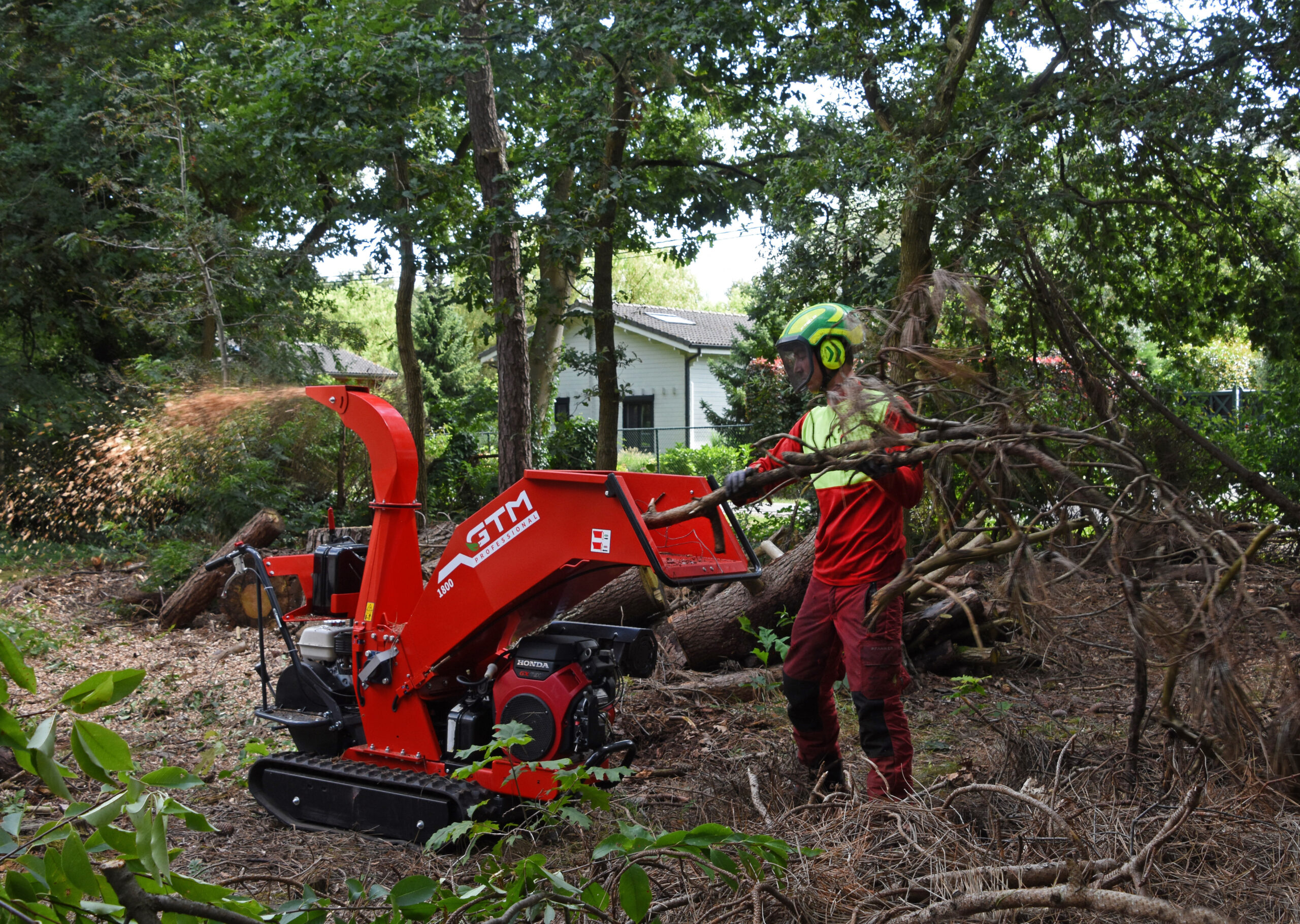
GTM Professional explains the difference
The terms “wood chipper” and “wood shredder” are often used interchangeably, but did you know they are actually different machines? The function of both a chipper and a shredder is the same: reducing the volume of pruning waste. However, there is a fundamental difference inside the machine. There are different cutting mechanisms used to process branches. We are happy to explain how they work and what the advantages and disadvantages are.
Different cutting techniques
There are many different types of chippers and shredders. From enormous forestry machines that devour thick tree trunks to small garden machines you can buy at a hardware store. The machines can generally be divided into three main categories based on their cutting technique: the roller system, the rotor system and the disc system.
1. The roller system
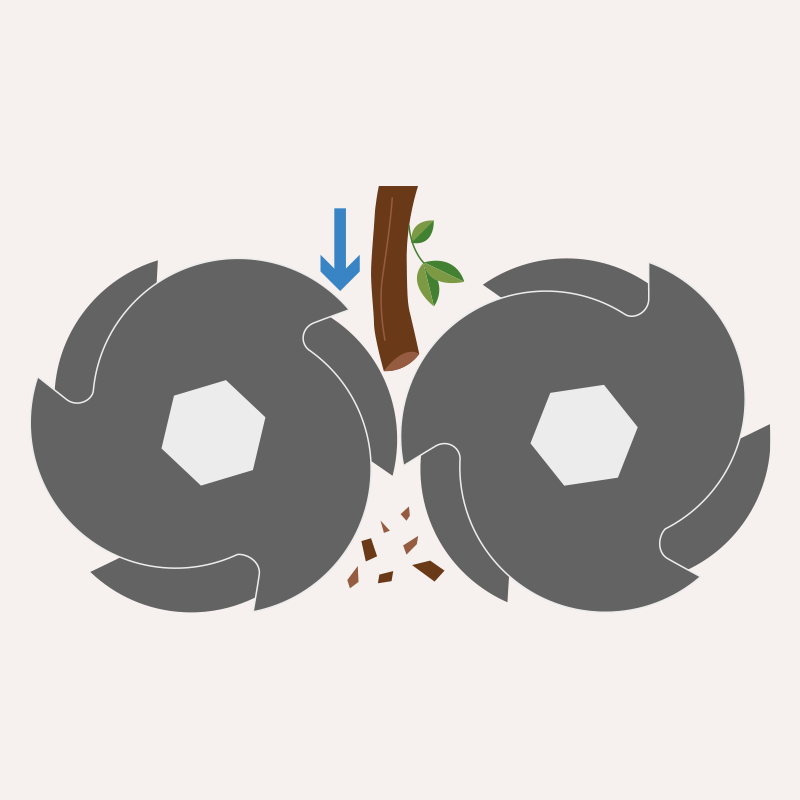
This cutting technique is mainly used on large forestry machines. The roller system consists of two rollers that slowly rotate in opposite directions. On the outside of these rollers are several blunt blades that essentially crush or chop the branches. The branches are guided toward the roller system via a horizontal feed roller. Because of this, the input height is low and the rollers can easily be reversed if a branch becomes stuck. However, due to the additional infeed roller, this machine is not particularly compact.
Machines with this roller system are officially called “shredders”. The wood fibers of the branches are usually chopped lengthwise. As a result, the material produced by a shredder is coarser and more irregular than the material produced by a wood chipper.
2. The rotor system
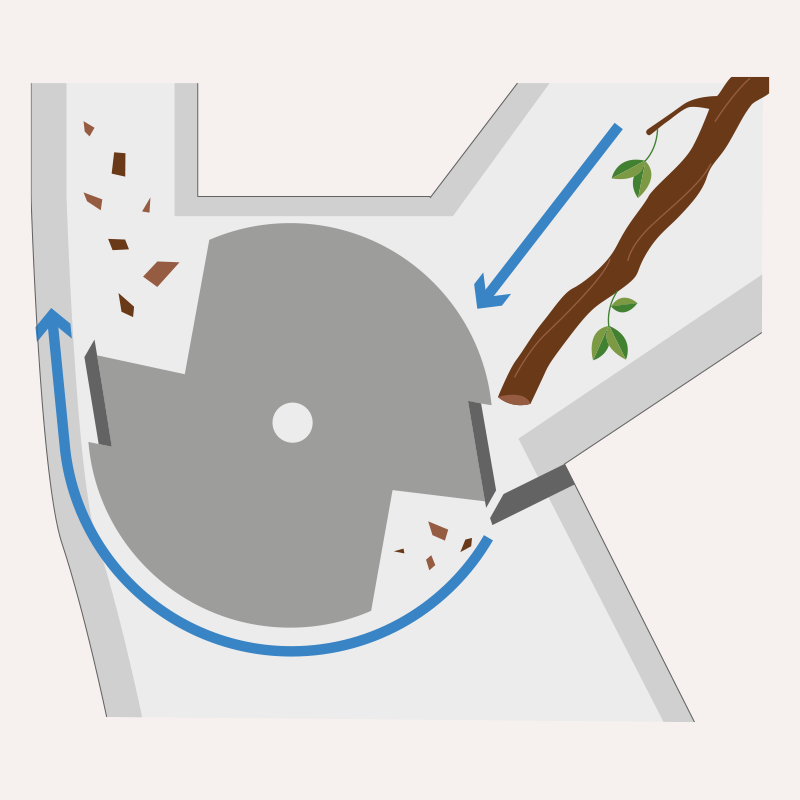
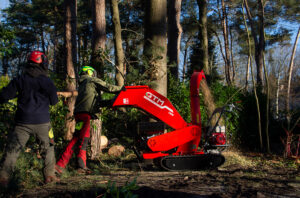
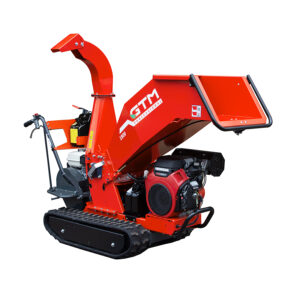
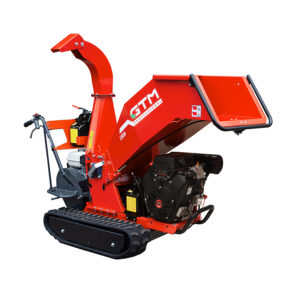
The rotor system is also known as a “drum system.” This technique consists of a metal rotor (drum) on which two blades are mounted. These rotate at high speed past a counter blade. Due to the pulling action and gravity, branches are automatically pulled inside. This means no separate infeed roller is required, making the rotor system simple, lightweight, and compact. However, if a branch becomes stuck, the machine must be opened to remove it.
The geometry of the system ensures that the wood fibers of the branches are cut across the grain. With the blades specifically sharpened, there is very little resistance during cutting, producing fine, uniform wood chips. The rotational force of the rotor also throws the chips outward automatically, without requiring a separate discharge system.
With the rotor system, branches are finely cut with blades instead of being chopped. That is why such a machine is called a “wood chipper”. Still, no one will bat an eye if you call it a shredder, like we also do sometimes!
3. The disc system
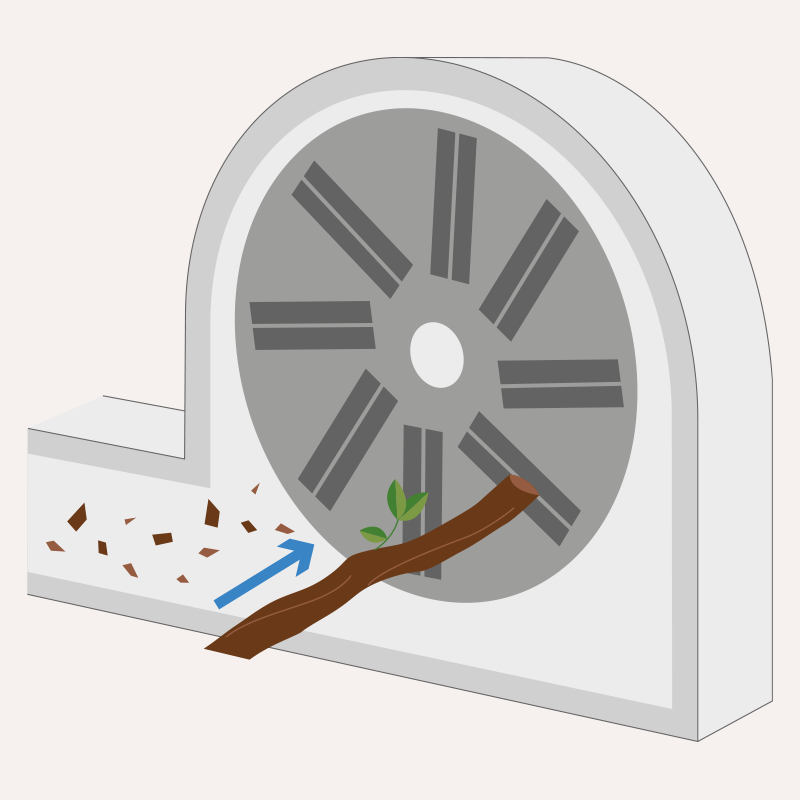
This cutting technique is mainly used for machines designed to process freshly pruned branches with little foliage. The disc system consists of a round disc with several blades mounted on it. Branches are pressed against the disc and cut. Behind the disc there is a ventilation system that blows the wood chips far outward. When a lot of wet material such as leaves is fed into the machine, it can accumulate and cause blockages.
The disc system is affordable and lightweight. As with the rotor system, the blades wear over time and must occasionally be replaced. With the disc system this is somewhat easier than with the rotor system. However, blade wear is less even because the parts closer to the axis are used less frequently.
The processed material actually consists more of slices than chips. Nevertheless, machines with this disc system are also called “wood chippers”.
Advantages and disadvantages at a glance
With all this information, here is a quick overview of the advantages and disadvantages of the different cutting mechanisms:
| 1. Roller system | 2. Rotor system | 3. Schijfsysteem |
| + Suitable for heavy duty-work. + Low input height. + Stuck branches can easily be reversed. + Can process soft material easily. - Large and heavy machine: difficult to move and requires a lot of space. - Coarse, irregular chips that compost slowly. | + Suitable for both professional and private use. + Compact dimensions. + Simple design: no separate infeed or discharge system needed. + Can also process soft material. + Produces uniform chips that compost quickly. - Machine must be opened when a branch becomes stuck. - Blades need to be replaced over time. | + Suitable for both professional and private use. + Affordable and lightweight. + Disc is easy to replace. - Requires a separate ventilation system. - Blades wear unevenly and must be replaced. - Irregular chips shaped like slices. - Less suitable for processing soft material. |
Gravity-fed chippers
Gravity-fed machines come in all shapes and sizes. For large or small jobs, with various chassis, and with petrol engines or electric drives.
Would you like to purchase a wood chipper, but feel overwhelmed by the choices? We are happy to help you make the right choice. Go to the category wood chippers and use the information buttons in our filters.